
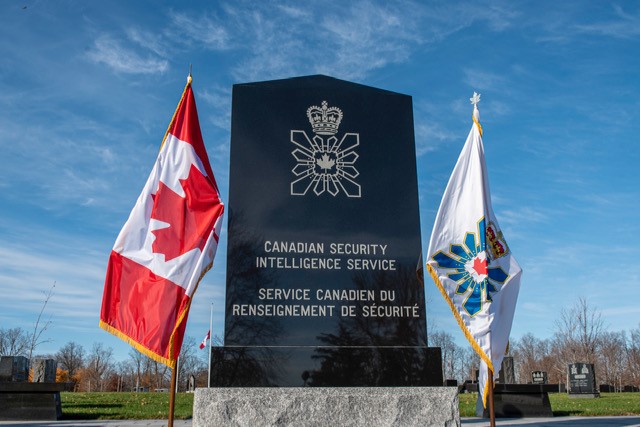
The CSIS National Memorial Cemetery at Beechwood is a place of remembrance dedicated to the people who have served Canada through intelligence and national security work.
Created through a partnership between the Canadian Security Intelligence Service, the Pillar Society and the Beechwood Cemetery Foundation, the cemetery provides a dignified final resting place for eligible members of the CSIS community and their families. It also gives Canadians a rare public space in which to recognize a profession whose contributions are often made quietly and remain largely unknown.
The Establishment of CSIS
The Canadian Security Intelligence Service is Canada’s principal civilian security intelligence service. It investigates and reports on activities that may constitute threats to the security of Canada and advises the Government of Canada on national security matters.
CSIS was formally established on June 21, 1984, following the passage of the Canadian Security Intelligence Service Act. Its creation transferred responsibility for civilian security intelligence from the RCMP Security Service to a new civilian agency.
This transition represented an important moment in the history of Canada’s intelligence community. It also created a lasting connection between former members of the RCMP Security Service and the generations of intelligence professionals who would serve with CSIS.
The Beginning of the Pillar Project
The idea of creating a cemetery for the CSIS community began to take shape in 2013.
On July 7, 2013, former Pillar Society president Donald G. Mahar and Clinton Langille, a former CSIS liaison officer to the Pillar Society, met with members of the CSIS executive to discuss establishing a dedicated section at Beechwood Cemetery.
The Pillar Society represents former members of the RCMP Security Service and CSIS. Its involvement helped connect the proposed cemetery with the broader history of security intelligence in Canada.
Jeff Yaworski, then CSIS Deputy Director of Operations, supported the initiative and became the principal point of contact between the CSIS executive and the project’s organizers. The initiative soon became known as the Pillar Project.
Consulting the CSIS Community
In May 2014, CSIS conducted an internal survey to determine whether employees supported the creation of a dedicated cemetery.
More than 400 employees completed the survey or provided written comments. The results demonstrated strong support:
- 88% supported designating a section of Beechwood as the CSIS National Memorial Cemetery.
- 42% expressed an interest in obtaining an interment right.
- A further 36% remained undecided but were open to the possibility.
Employees also shared ideas about how the cemetery could represent the entire CSIS community. Their feedback helped establish the principle that the site should honour employees from across the Service, regardless of their role, occupation or length of service.
The results gave the project the momentum required to move from an initial concept toward formal development.
A National Partnership
Several months of consultation, research and planning followed.
On August 8, 2015, the Beechwood Cemetery Foundation, CSIS and the Pillar Society finalized a tripartite agreement governing the creation and operation of the CSIS National Memorial Cemetery.
Each partner brought a distinct role to the project. CSIS represented the serving intelligence community. The Pillar Society provided historical continuity and a connection with retired members. The Beechwood Cemetery Foundation offered the expertise, land and long-term stewardship required to establish a permanent national place of remembrance.
From the beginning, the partners agreed that public funds would not be used to create or maintain the cemetery. The Beechwood Cemetery Foundation established a dedicated charitable fund, allowing individuals and organizations to support the project directly.
Fundraising began through private donations, Pillar Society contributions and donations made through the Government of Canada Workplace Charitable Campaign. Current and retired CSIS employees also began purchasing interment rights within the new section.
Establishing the Cemetery’s Governance
The approval of the CSIS National Memorial Cemetery bylaws on August 22, 2016, was another major milestone.
The bylaws established the principles governing the cemetery’s development, appearance and long-term care. Their objectives are to honour past and present CSIS employees and to ensure that every part of the cemetery is developed, protected, maintained and cared for with dignity.
Once sufficient funding had been secured, a professional survey of the site was completed. Artistic renderings prepared in early 2017 helped define the cemetery’s physical layout and long-term vision.
The First Interment
On April 4, 2017, Peter Godin became the first person interred in the CSIS National Memorial Cemetery.
For the first time, the CSIS flag was displayed during a funeral ceremony at Beechwood. This deeply significant moment transformed the cemetery from a planned commemorative project into an active place of burial, remembrance and family connection.
The cemetery would now serve as the final resting place for members of the CSIS community and eligible members of their families who chose to be commemorated there.
On June 9, 2017, a flag presented by CSIS was formally placed in Beechwood’s Sacred Space. It joined the flags of other Canadian security, intelligence, defence and public service organizations represented within the national memorial centre.
The Dedication of the Cemetery
During the 2018–2019 fiscal year, an Ottawa contractor was engaged to begin developing the cemetery’s ceremonial infrastructure.
Interlocking stones were purchased, and a pathway was installed between the northern portion of the cemetery and the central square. Additional stones were secured and stored at Beechwood for the future construction of the main parade square.
On November 14, 2018, the CSIS National Memorial Cemetery was formally dedicated.
The ceremony was attended by CSIS Director David Vigneault; Deputy Director of Operations Jeff Yaworski; Pillar Society national president Donald G. Mahar; CSIS employees; and representatives of Beechwood.
Following the dedication, participants gathered in the Beechwood National Memorial Centre for the unveiling of a special display featuring historical artifacts from CSIS and the Pillar Society.
The dedication affirmed the cemetery’s national significance and its role in preserving the history of Canadian security intelligence.
The CSIS National Monument
On October 30, 2020, CSIS and Pillar Society representatives unveiled the CSIS National Monument in the cemetery’s new parade square.
Standing more than three metres, the granite monument bears the CSIS crest and the organization’s name in both official languages.
The monument was designed to complement the nearby memorials and ceremonial features at Beechwood. Its location also emphasizes the historical relationship between the RCMP Security Service and CSIS, connecting two important chapters in the development of Canada’s security intelligence community.
The monument created a central place for ceremonies, wreath-laying and personal reflection. It also gave the cemetery a defining symbol that could be recognized by employees, retirees, families and visitors.
Raising the Canadian and CSIS Flags
On November 7, 2024, another important chapter was added to the cemetery’s history.
During the annual CSIS Remembrance Ceremony, the Canadian and CSIS flags were raised together over the cemetery for the first time.
The flags created a powerful visual symbol of the relationship between Canada and the intelligence professionals who work to protect it. Standing beside the national monument and parade square, they represent service, sacrifice, vigilance and dedication to the country.
The ceremony included wreath-laying, remarks from CSIS and Pillar Society representatives, and moments of reflection honouring those who had served in silence.
The raising of the flags also completed an important part of the cemetery’s original physical vision. The flags transformed the parade square into a more complete ceremonial space and established a visible focal point for future commemorations.
Their presence reminds visitors that intelligence service is national service. Although much of this work must remain confidential, the commitment of the people who undertake it deserves public recognition.
Read more about the historic raising of the Canadian and CSIS flags.
Ceremony, Education and Public Engagement
As the cemetery developed, its purpose expanded beyond interment.
During Veterans’ Week, a dignified remembrance ceremony is held to honour members of the intelligence community who have died. The ceremony recognizes a form of national service that is rarely conducted in public and whose full impact may not be known for many years.
The cemetery has also become a place for historical education. Through events such as Spies in the Cemetery, retired intelligence professionals share personal insights, declassified operations and stories from Canada’s intelligence history.
These programs help Canadians better understand the responsibilities, risks and sacrifices associated with intelligence work. They also ensure that the experiences of former intelligence professionals are recorded and passed to future generations.
Sir William Stephenson Square
The cemetery reached another important milestone on July 16, 2026, when its central parade square was formally named Sir William Stephenson Square.
The ceremony took place on the 42nd anniversary of the establishment of CSIS and included the unveiling of the cemetery’s first historical plaque.
Sir William Stephenson was a Canadian-born intelligence leader who directed British Security Coordination in the Western Hemisphere during the Second World War. Operating under the codename “Intrepid,” he helped build intelligence networks, disrupt enemy operations and strengthen cooperation among Canada, the United Kingdom and the United States.
His work contributed to the intelligence-sharing relationships that later developed into the modern Five Eyes partnership.
The plaque recognizes Stephenson’s contributions to the Allied victory, his role in protecting Igor Gouzenko and his family following Gouzenko’s 1945 defection, and his lasting influence on international intelligence cooperation.
Naming the square in his honour created a permanent connection between Canada’s early intelligence history and the generations of professionals who later served with the RCMP Security Service and CSIS.
The ceremony brought together representatives of CSIS, Public Safety Canada, the British High Commission, the Five Eyes community, the RCMP Veterans’ Association, the Pillar Society and Beechwood.
Read the full story of Sir William Stephenson Square.
A Living Place of Remembrance
The CSIS National Memorial Cemetery continues to evolve.
Future development plans include additional ceremonial infrastructure, historical plaques and interpretive features exploring Canada’s intelligence history. Proposed projects also include permanent recognition of the Five Eyes intelligence-sharing partnership and continued improvements to the cemetery’s pathways, entrance and ceremonial spaces.
Each new interment, ceremony and historical initiative adds another chapter to the site’s story.
For visitors to Beechwood, the cemetery offers a rare opportunity to learn about a community whose members have dedicated their careers to protecting Canada, often without public acknowledgment. For CSIS employees, retirees and their families, it provides a lasting place of belonging, remembrance and shared identity.
The CSIS National Memorial Cemetery is believed to be the only cemetery in the Western world created specifically for members of a national intelligence service. More importantly, it is the only public place in Canada dedicated to commemorating CSIS and the people who have served within it.
Their work may have taken place away from public view, but their service and legacy will not be forgotten.