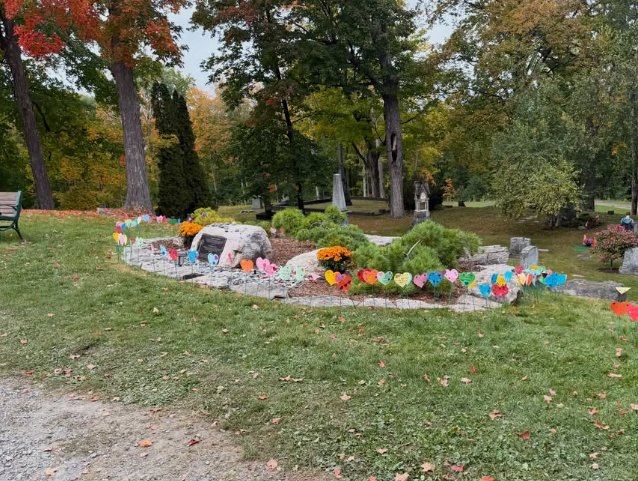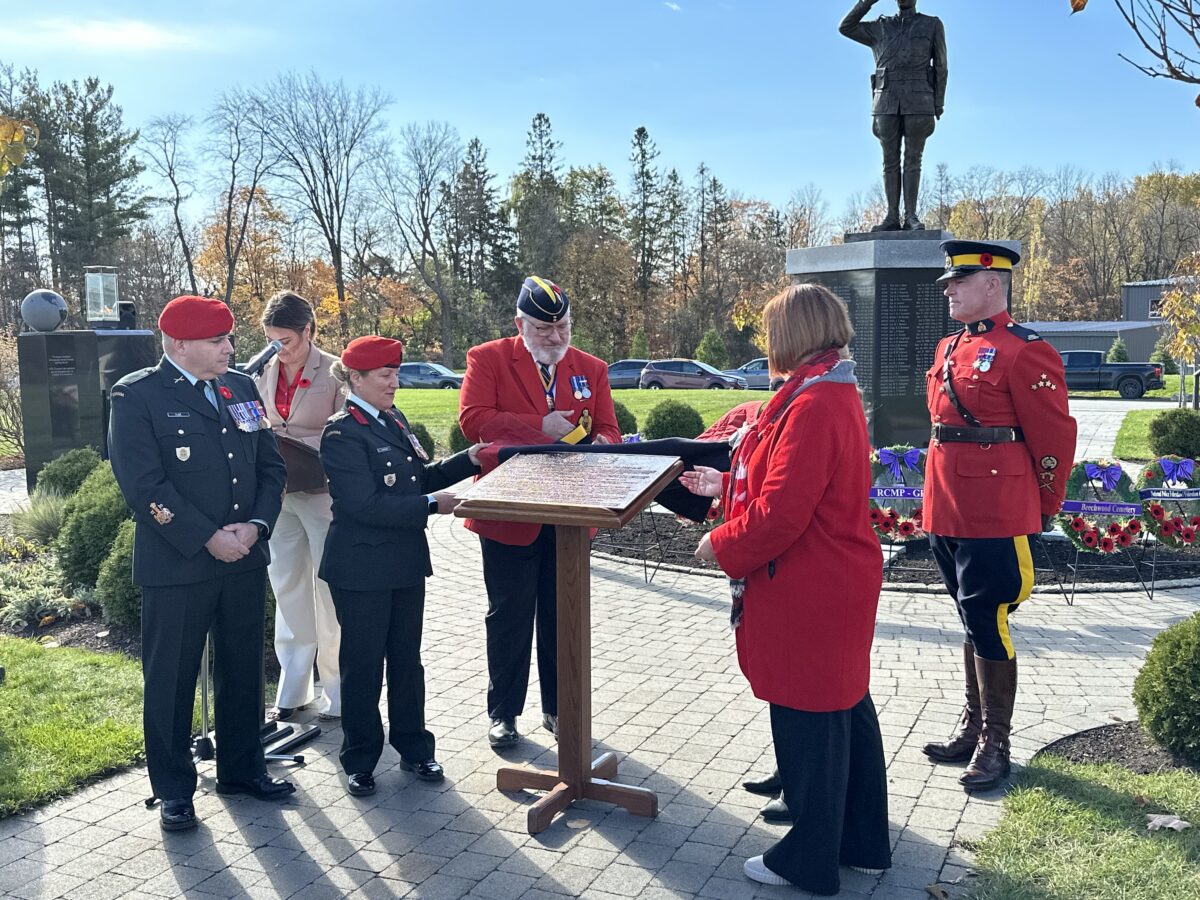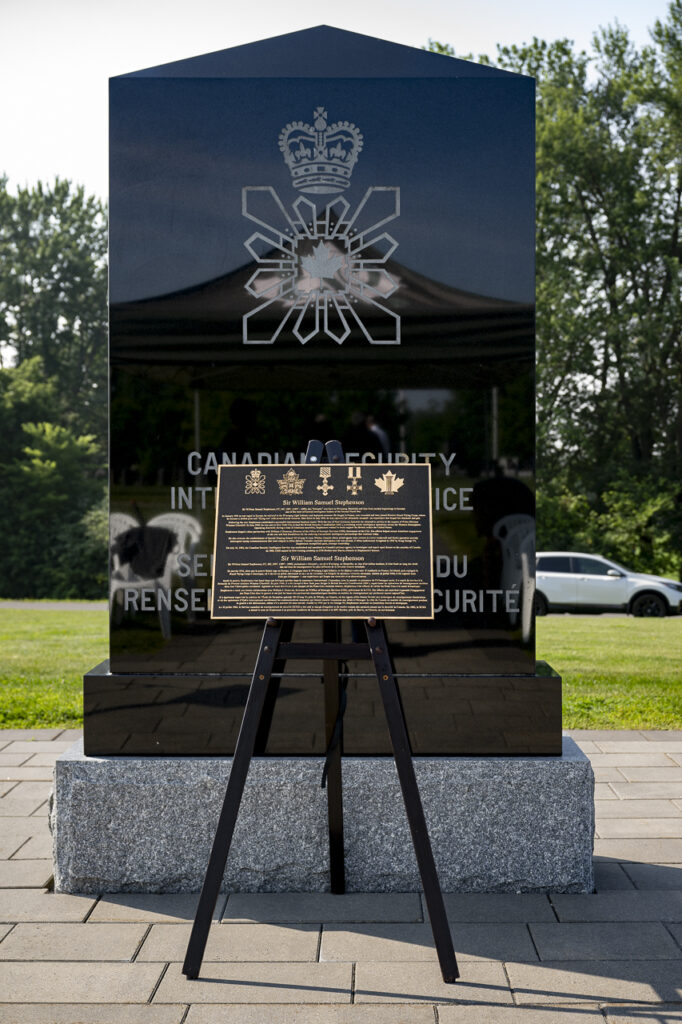
On July 16, 2026, the CSIS National Memorial Cemetery at Beechwood marked the 42nd anniversary of the establishment of the Canadian Security Intelligence Service with the unveiling of a commemorative plaque honouring Sir William Stephenson.
During the ceremony, the cemetery’s central square was formally named Sir William Stephenson Square, creating a permanent tribute to one of Canada’s most influential intelligence leaders.
The plaque is the first historical marker installed within the CSIS National Memorial Cemetery. It recognizes Stephenson’s remarkable life, his contributions to the Allied victory during the Second World War and his lasting influence on intelligence cooperation in Canada and around the world.
From Winnipeg to the Western Front
William Samuel Stephenson was born in Winnipeg, Manitoba, on January 23, 1897. Raised in modest circumstances, he left school after Grade 6 and began working at a young age. When the First World War began, Stephenson enlisted with the 101st Battalion of the Winnipeg Light Infantry. He served in France, where he was wounded, before joining the Royal Flying Corps and returning to combat as a pilot.
For his wartime courage, Stephenson received the Military Cross, the Distinguished Flying Cross and the Croix de Guerre.
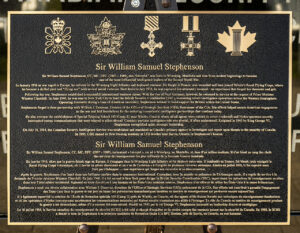
Pillar Society – William Stephenson Plaque Unveiling
Following the war, he moved to England and became involved in the rapidly developing field of wireless technology. In 1922, he helped pioneer the wireless transmission of photographs, contributing to technology that would eventually lead to the modern fax machine. His innovations and business interests made him a successful international entrepreneur.
However, it was his ability to build relationships, understand emerging threats and operate discreetly that brought him into the world of intelligence.
A Quiet Architect of Allied Victory
In 1940, with the support of British Prime Minister Winston Churchill and Stewart Menzies, head of the British Secret Intelligence Service, Stephenson was appointed director of British intelligence operations throughout the Western Hemisphere.
Working under the codename “Intrepid,” he established his headquarters in New York City and assumed responsibility for an organization that became known as British Security Coordination.
What began as a small intelligence presence grew into a sophisticated network of approximately 2,000 people by 1942. Canadians played a significant role in its operations, supported by the Government of Canada, the RCMP, the Canadian military and the Department of External Affairs.
Stephenson’s network included a recruitment and operations office in Toronto, the Special Operations Executive training facility known as Camp X in Whitby and Hydra, a major communications centre that transmitted classified information between New York, Ottawa, Washington and London.
His organization also operated Station M, a secret document production facility in Toronto, and supported communications interception activities in Bermuda.
Through British Security Coordination, Stephenson helped disrupt enemy networks, strengthen Allied intelligence-sharing and build public support for the war effort. He also played an important role in the creation of the American Office of Strategic Services, the wartime predecessor of the Central Intelligence Agency.
His efforts helped establish a culture of trust and information-sharing between Canada, the United Kingdom and the United States. These relationships contributed to the intelligence partnerships that later developed into the modern Five Eyes alliance.
Commander Ray Snook, Royal Navy (Retired), Chief of Staff of the British Defence Liaison Staff at the British High Commission, reflected on this legacy during the ceremony.
He described Stephenson as a crucial bridge between Allied nations who helped establish patterns of cooperation, mutual reliance and shared purpose that remain central to international security today.
Protecting the Gouzenko Family
Stephenson’s contributions continued as the Second World War came to an end. Following Igor Gouzenko’s defection from the Soviet Embassy in Ottawa on September 5, 1945, Stephenson worked behind the scenes to help protect Gouzenko, his family and the classified documents he had brought forward.
Gouzenko’s revelations exposed Soviet espionage networks operating in Canada and other Western countries. His defection is widely regarded as one of the events that marked the beginning of the Cold War. Evy Gouzenko, one of Igor and Svetlana Gouzenko’s children, was unable to attend the plaque unveiling but shared a written reflection for the ceremony. She expressed her family’s enduring gratitude for Stephenson’s intervention during a dangerous and uncertain period.
“Canada was saved. The West was warned,” she wrote of the impact of Stephenson’s actions.
Her message concluded with a personal tribute:
“I am forever grateful to our great Canadian hero, Sir William Stephenson.”
Remembering the Man Behind the Legend
The ceremony also included a personal reflection from Jeff Yaworski, a member of the CSIS National Memorial Cemetery Committee and former CSIS Deputy Director of Operations. In September 1986, shortly after graduating from the Sir William Stephenson Academy at Camp Borden, Yaworski and his wife, visited Stephenson at his home in Bermuda.
Although Stephenson was nearly 90 years old and experiencing declining health, Yaworski remembered him as mentally sharp, deeply engaged with international affairs and remarkably humble.
When asked to identify his greatest achievement during the Second World War, Stephenson simply answered, “Staying alive.”
He did not dwell on his wartime accomplishments or his relationships with international leaders. He declined to be photographed, preferring that people remember him as he had been. For Yaworski, the encounter revealed the character behind Stephenson’s reputation as the “Quiet Canadian.”
“Meeting Sir William Stephenson truly was the opportunity of a lifetime,” Yaworski said. “I am very proud that our square is named in his honour.”
A Legacy Preserved at Beechwood
Stephenson was knighted by King George VI in 1945. The following year, he received the United States Medal for Merit from President Harry Truman. He was appointed a Companion of the Order of Canada in 1979 and received the William J. Donovan Award from the OSS Society in 1983.
He died in Bermuda on January 31, 1989.
The unveiling ceremony brought together representatives of CSIS, Public Safety Canada, the British High Commission, the Five Eyes community, the RCMP Veterans’ Association and the Pillar Society, the alumni association of the former RCMP Security Service and CSIS.
The plaque was made possible through the generosity of Pillar Society members Al Treddenick, Neil Bisson and Phil Gurski. Their support has ensured that Stephenson’s contributions will be permanently recorded within the CSIS National Memorial Cemetery.
The naming of Sir William Stephenson Square is about more than recognizing one individual. It honours generations of intelligence professionals whose work is often conducted quietly and without public recognition.
Sir William Stephenson understood that security depends on vigilance, trust and cooperation. His work helped shape the Allied victory, protect Canada during the opening days of the Cold War and establish international partnerships that continue to safeguard democratic nations.
His achievements were largely accomplished away from public view. His impact, however, remains visible today.
At Beechwood, Sir William Stephenson Square will ensure that the story of this extraordinary Canadian and the values of service, partnership and quiet dedication that defined his life, will continue to be remembered.
*Photo Credit: Richard Lawrence Photography. 2026
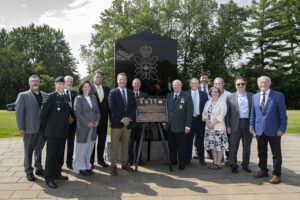
Pillar Society – William Stephenson Plaque Unveiling