
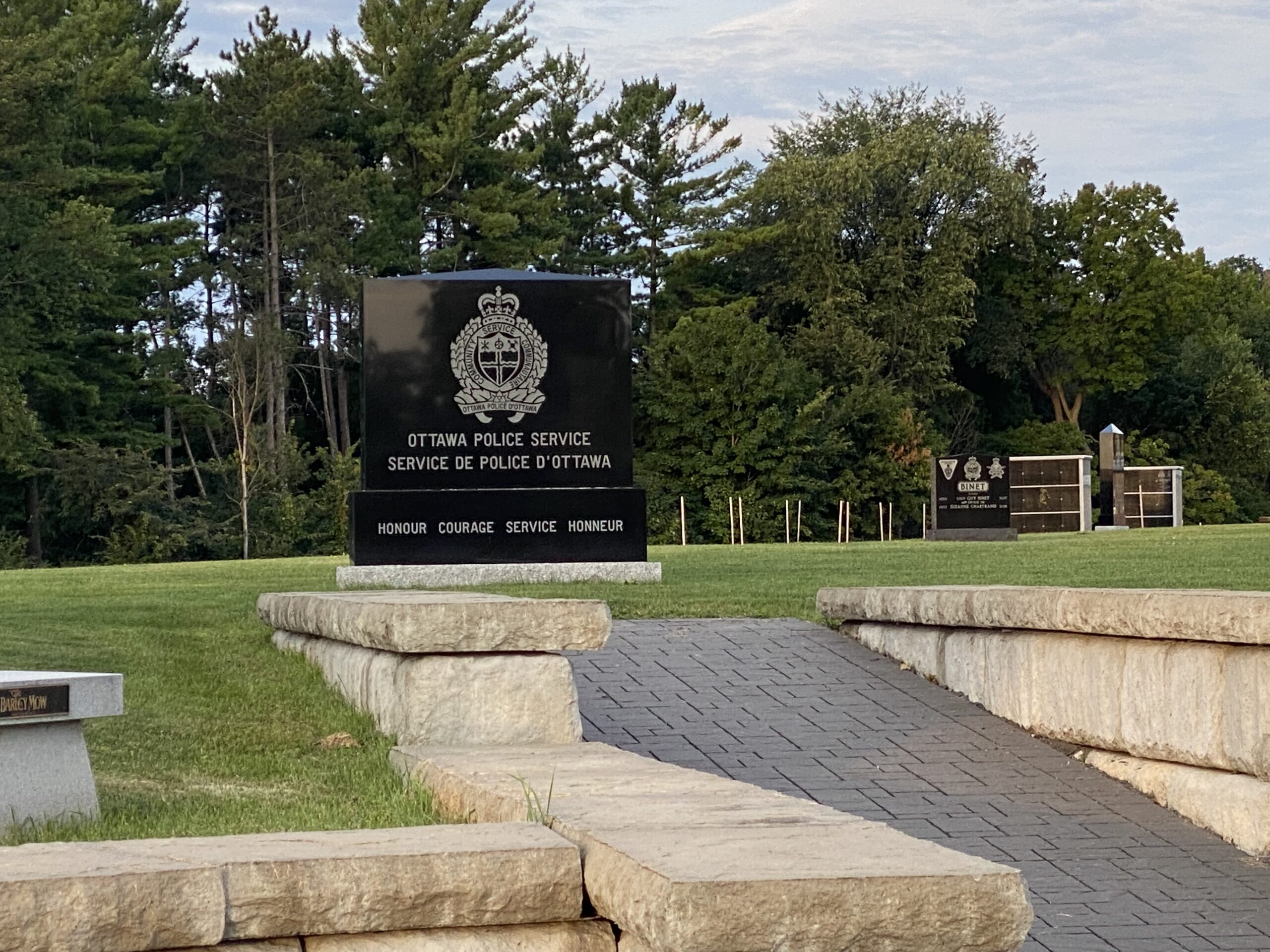
The Ottawa Police Service Memorial Cemetery at Beechwood was created as a permanent place of honour for members of the Ottawa Police Service, veterans, employees and their families.
Located within Beechwood Cemetery, the National Cemetery of Canada, the section provides a central place for burial, visitation, commemoration and reflection. It also preserves the history and heritage of Ottawa’s policing community through monuments, ceremonies and public education.
Establishing the Memorial Cemetery
The development of the Ottawa Police Service Memorial Cemetery began in October 2011.
The initiative was led by the Ottawa Police Association and the Senior Officers’ Association, with the support and collaboration of the Ottawa Police Service and the Beechwood Cemetery Foundation. The Ottawa Police Veterans Association later joined the partnership, strengthening the cemetery’s historical, commemorative and ceremonial programming.
The vision was to create more than a dedicated burial section. The partners wanted a recognizable and lasting place where Ottawa’s policing community could gather, honour its members and preserve its shared history.
The cemetery provides current and former members with the opportunity to be laid to rest alongside colleagues and loved ones. It also gives families a place where their connection to the Ottawa Police Service can be permanently recognized.
Remembering Fallen Members
Beechwood has long been the final resting place of people connected to policing in Ottawa. The stories reinforce the importance of having a permanent place where service and sacrifice can be remembered.
The Ottawa Police Service Memorial Cemetery builds upon this longstanding connection between Beechwood and Ottawa’s policing community.
The Main Monument
A defining milestone in the cemetery’s development came on October 27, 2021, with the unveiling of the Ottawa Police Service Memorial Cemetery Main Monument.
The monument was the result of 10 years of fundraising, community engagement and collaboration among the cemetery’s partners. It established a central focal point within the section and gave physical expression to the values of honour, courage and service.
The front of the monument features the official Ottawa Police Service crest.
The reverse recognizes the police organizations that contributed to the development of the modern Ottawa Police Service. It displays the historic crests of the Gloucester Police, Nepean Police, Ontario Provincial Police, Ottawa Police and Vanier Police.
Together, these crests recognize that the current Ottawa Police Service was shaped by several municipal and regional policing traditions.
The monument also carries the bilingual epitaph:
IN MEMORY OF ALL THOSE WHO HAVE GIVEN THEIR LIVES IN SERVICE
EN MÉMOIRE DE TOUTES LES PERSONNES QUI ONT DONNÉ LEUR VIE EN SERVICE
The inscription extends remembrance beyond those killed in the line of duty. It honours members who died from accidents, occupational illnesses, and visible or invisible injuries connected to their service.
Learn more about the unveiling of the Main Monument.
The Canadian Police and Peace Officers’ Memorial Tablets
Another major development took place in 2021 when the original granite tablets from the Canadian Police and Peace Officers’ Memorial on Parliament Hill were installed at the Ottawa Police Service Memorial Cemetery.
These historic tablets are directly connected to a national tradition that began in Ottawa.
Following the murder of Ottawa Police Constable David Kirkwood on July 11, 1977, local police officers committed themselves to preserving his memory and honouring other officers killed in the line of duty.
The first memorial service was held on Parliament Hill on September 24, 1978. Over time, it developed into the Canadian Police and Peace Officers’ Memorial Service.
In 1994, granite tablets bearing the names of 227 fallen police officers were installed at the Canadian Police Memorial Pavilion on Parliament Hill. Additional stones recognized fallen peace officers and explained the history of the memorial.
The honour roll was expanded in 1995 to include members of other Canadian law enforcement organizations. In 1998, the Government of Canada proclaimed the last Sunday of September as Police and Peace Officers’ National Memorial Day.
A new honour roll was installed on Parliament Hill in 2000. The original granite tablets were removed and placed in storage.
Through the efforts of the Beechwood Cemetery Foundation and its policing partners, the tablets were recovered and installed at the Ottawa Police Service Memorial Cemetery in 2021. They are displayed near the northeast corner of the section, close to its main entrance.
Their placement at Beechwood is especially meaningful. The national memorial tradition began with members of the Ottawa Police who wanted to ensure that the sacrifice of Constable Kirkwood would never be forgotten. The original stones now preserve that national story within Ottawa’s police cemetery.
Creating a Ceremonial Space
The cemetery continued to evolve following the installation of its monuments. A flagpole and ceremonial area were developed to provide a formal setting for commemorations, moments of silence and community gatherings.
On June 20, 2025, the Ottawa Police Service held its inaugural Flag-Raising Ceremony at the Ottawa Police Service Memorial Cemetery. The event commemorated more than 170 years of service to the people of Ottawa and established a new annual tradition at Beechwood.
The ceremony brought together representatives of the Ottawa Police Service, Ottawa Police Association, Senior Officers’ Association and Ottawa Police Veterans Association. Members of the OPS Mounted Unit and Ceremonial Guard also participated alongside police leadership, community partners and members of the public.
Chief Eric Stubbs reflected on the history and future of the Service. He honoured those who had served while emphasizing the continuing importance of public safety, community trust and the responsibilities of policing in Canada’s capital.
Matt Cox, President of the Ottawa Police Association, spoke about the daily dedication of Ottawa Police Service employees and the shared sense of purpose connecting current members, veterans and those who came before them.
Piper Brad Hampson performed The Lament, followed by a moment of silence for Ottawa Police Service members who made the ultimate sacrifice. This tribute took place near the graves of members whose lives and service are remembered at Beechwood.
The Canadian flag was then raised above the cemetery as those gathered sang O Canada. The OPS Mounted Unit completed a ceremonial parade past the flagpole, connecting the Service’s modern responsibilities with its longstanding traditions.
The ceremony reaffirmed the Ottawa Police Service Memorial Cemetery as more than a place of burial. It is a living place of remembrance where members, families and the community can gather to honour the past, recognize those who serve today and preserve this legacy for the future.
Read the full story of the inaugural OPS Flag-Raising Ceremony.
A Living Place of Remembrance
Since its establishment in 2011, the Ottawa Police Service Memorial Cemetery has grown from a dedicated burial section into an important place of remembrance, history and community gathering.
Its development has been made possible through the sustained partnership of the Ottawa Police Service, Ottawa Police Association, Senior Officers’ Association, Ottawa Police Veterans Association and Beechwood Cemetery Foundation.
The Main Monument honours members and families from across Ottawa’s policing traditions. The historic Canadian Police and Peace Officers’ Memorial tablets connect the cemetery to a national story of remembrance. The flagpole and annual ceremony provide a formal setting where that legacy can continue to be recognized.
The cemetery preserves the past while continuing to evolve. It ensures that service is honoured, sacrifice is remembered and the contributions of Ottawa’s policing community remain accessible to future generations.