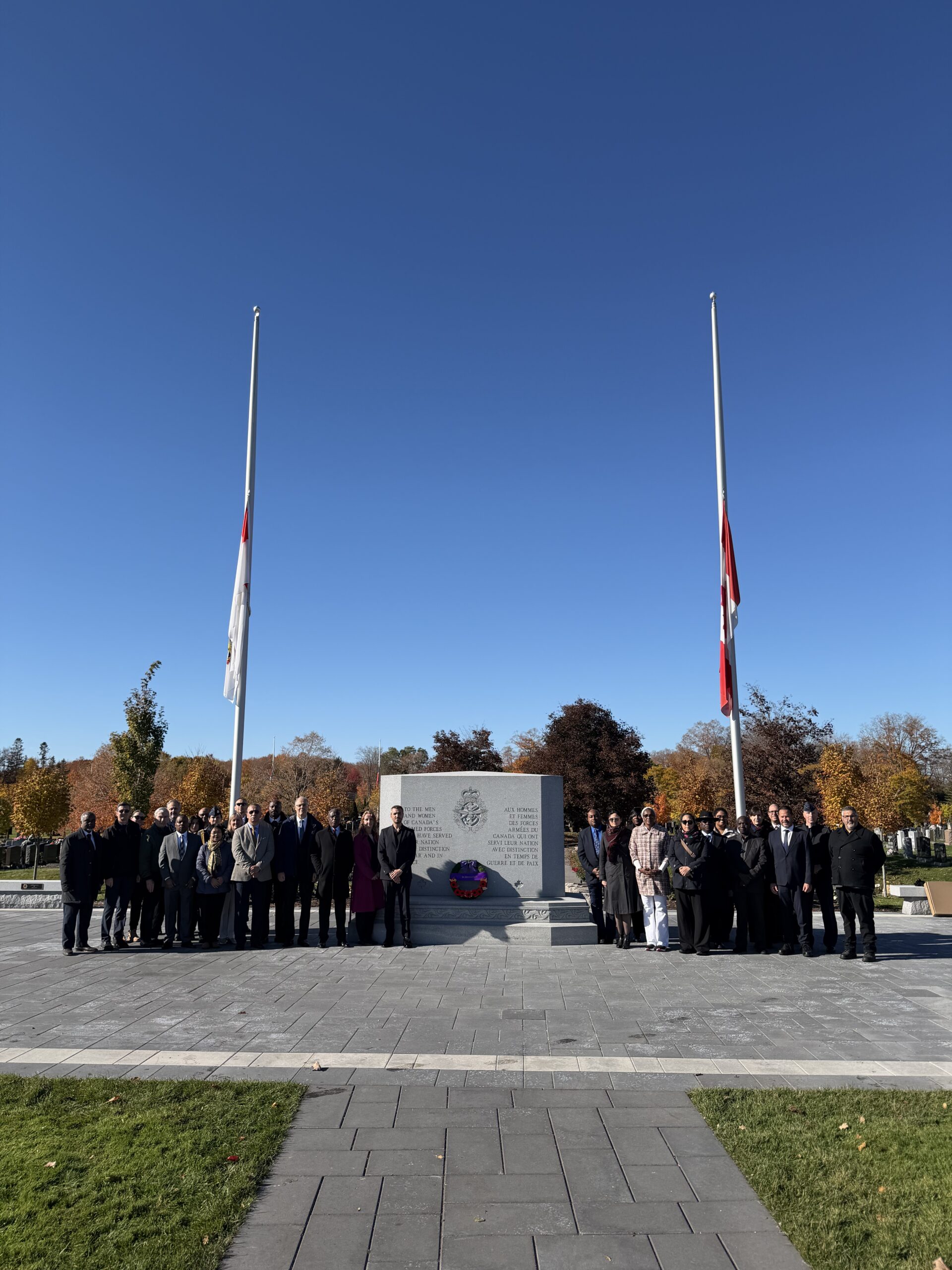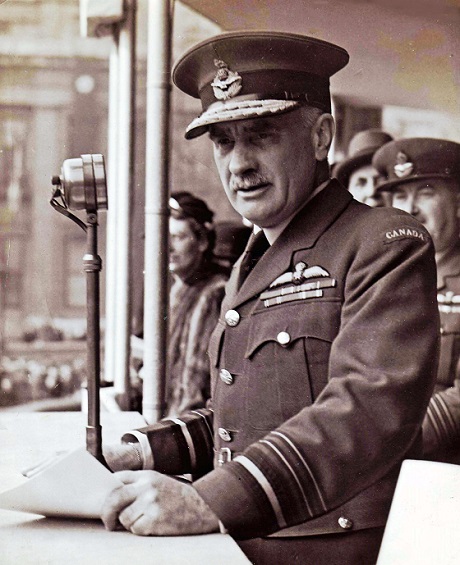
In the hallowed grounds of the National Military Cemetery at Beechwood rests a man whose contributions to Canadian aviation are nothing short of legendary—Air Marshal Harold “Gus” Edwards. Born on December 24, 1892, in Chorley, England, Edwards’ life took a remarkable turn in 1903 when his family immigrated to Cape Breton, Nova Scotia. At the tender age of 14, Edwards left school and began working as a trapper boy in a Cape Breton coal mine. His determination and ingenuity soon saw him rise to the position of chief electrician for the mine, a testament to his early aptitude for technical mastery.
The onset of the First World War opened a new chapter in Edwards’ life. He served as a fighter pilot, but his service came at a cost—he was shot down and captured as a prisoner of war. Despite multiple escape attempts, including one that nearly succeeded, Edwards shifted his focus to self-education, continuing a routine of learning that he had established after leaving school.

Following the war, his adventurous spirit led him to Russia, where he flew with the Royal Air Force in support of the White Russians during the tumultuous period of the Russian Civil War.
Upon returning to Canada, Edwards joined the nascent Canadian Air Force. His contributions were pivotal during this period, notably in the aerial mapping of Manitoba and the transformation of RCAF Station Dartmouth from a modest seaplane base into a fully operational air station, now known as 12 Wing Shearwater. Edwards also played a crucial role in the rescue and relief efforts during the 1936 Moose River gold mine disaster in Nova Scotia, where he flew supplies to the site and transported survivors to the hospital in Halifax.
With the outbreak of the Second World War, Edwards found himself at the center of one of Canada’s most significant contributions to the Allied war effort—the British Commonwealth Air Training Plan (BCATP). This initiative, established in 1939, was designed to train pilots from across the Commonwealth and beyond in the skills needed to secure victory in the air against Nazi forces. Edwards was tasked with managing the personnel aspects of the Plan, a role that required both diplomatic finesse and organizational acumen, particularly when recruiting American flyers while navigating the complexities of U.S. neutrality. Edwards’ most notable legacy, however, may lie in his tireless efforts to ensure that Canadian airmen and airwomen served in Canadian squadrons under Canadian command.
As Air Officer Commanding-in-Chief of the RCAF Overseas, he was a staunch advocate for the “Canadianization” of air units, a move that would see the formation of Canadian squadrons within the RAF framework. His efforts culminated in the establishment of more than 40 Canadian squadrons—the 400-series squadrons that continue to serve with distinction to this day—and the creation of Number 6 (RCAF) Bomber Group, the only Canadian formation of that level to serve during the Second World War.
While Edwards’ push for Canadianization was not without controversy—earning him the title of “the most controversial officer in the Royal Canadian Air Force” from Canadian military historian C.P. Stacey—it was a critical step in securing the operational effectiveness, career progression, and morale of Canadian air and ground crews during the war. His unwavering commitment to his principles, even in the face of opposition, left an indelible mark on the structure and legacy of the RCAF.
In recognition of his extraordinary service, Edwards was awarded the Order of the Bath in 1943, along with numerous other decorations from various nations, including the Order of St. Anne and the Order of St. Stanislaus from Russia, the Légion d’honneur (Officer) and the Croix de guerre avec palme from France, the Military Order of the White Lion “for Victory” 1st Class from Czechoslovakia, and the Legion of Merit (Commander) from the United States.
Despite his remarkable achievements, Edwards’ life was not without hardship. His health, which had always been a challenge, declined rapidly after his return to Canada in 1943. He retired the following year and, on February 23, 1952, passed away at the young age of 59.

Today, the story of Air Marshal Harold “Gus” Edwards serves as a powerful reminder of the impact one individual can have on the course of history. His legacy lives on, not only in the annals of Canadian military history but also in the continued excellence of the RCAF squadrons he helped shape.