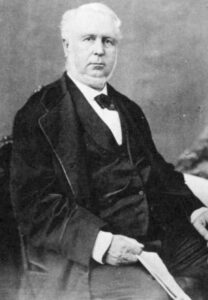
James Dyson Slater
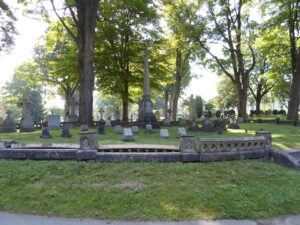
Section 48, Lot 1 (E)
James Dyson Slater was born in Manchester, England, on September 10, 1813. He immigrated to Upper Canada with his parents in 1830 or 1831, settling near Niagara Falls. Growing up in the Niagara region placed Slater near one of the most ambitious engineering projects in British North America: the Welland Canal.
The canal had been constructed to connect Lake Ontario and Lake Erie while bypassing Niagara Falls and the dangerous rapids of the Niagara River. By the early 1840s, however, its original wooden locks were deteriorating and could no longer meet the needs of increasing commercial traffic and larger vessels. The Province of Canada acquired the canal and began an extensive reconstruction program that became known as the Second Welland Canal.
From 1841 to 1845, Slater served as assistant engineer in charge of the location and construction of the canal between Port Dalhousie and Thorold. This northern section followed Twelve Mile Creek from Lake Ontario, passed through St. Catharines and climbed the Niagara Escarpment toward Thorold. It was one of the most technically demanding portions of the waterway.
Slater’s responsibilities would have involved surveying the route, establishing elevations and grades, helping determine the placement of locks and channels, and supervising construction. Engineers also had to manage the movement and supply of water while ensuring that the new works could operate alongside portions of the existing canal.
The reconstruction transformed the Welland Canal. Forty wooden locks were replaced by 27 larger locks built primarily from cut Queenston limestone. The canal was deepened, its locks were made longer and wider, and its overall capacity was approximately doubled. Completed in 1845, with additional work continuing in subsequent years, the Second Welland Canal became an essential part of the developing transportation network linking the Great Lakes with the St. Lawrence River.
The project was completed under difficult conditions. Thousands of labourers, many of them Irish immigrants, worked along the canal with limited equipment and in dangerous environments. Construction required enormous amounts of excavation, stonework and manual labour. Social unrest and labour disputes also affected the project between 1842 and 1844. Slater’s work therefore demanded not only technical ability, but also organization, judgment and practical leadership.
The Second Welland Canal represented an important step in Canada’s development. It strengthened an all-Canadian transportation route, supported the movement of agricultural products, timber and manufactured goods, and encouraged the growth of communities and industries throughout the Niagara Peninsula. Slater’s contribution placed him among the engineers who helped build the infrastructure upon which the Canadian economy would expand.
In 1845, following the completion of his work on the Welland Canal, Slater moved to Bytown after being appointed assistant engineer for the Ottawa River improvement works. These projects included the construction of dams, timber slides, bridges and roads. His experience on the Welland Canal would have prepared him well for the challenges of controlling waterways, overcoming changes in elevation and supporting navigation and commerce.
In the spring of 1849, Slater was appointed a provincial land surveyor. He practised in that profession until 1858, when he became superintendent of the Rideau Canal. He held the position until 1872, overseeing one of the country’s most important military and commercial waterways during a period of considerable change.
In 1847, Slater married Esther Sparks, the youngest daughter of Nicholas and Sarah Sparks. His connection to one of Bytown’s most prominent families may have contributed to Slater Street being named in his honour. His own professional and civic service, however, made him equally deserving of the distinction. From 1863 to 1870, he served as chairman of the public school board, contributing to the development of education in the growing capital.
James Dyson Slater died on October 24, 1876. His career connected two of Canada’s most important waterways. From helping reconstruct the Welland Canal to overseeing the Rideau Canal, Slater devoted much of his life to the engineering works that carried people, goods and ideas across a growing country. His story reflects the lasting role of canal engineers in building Canada.
Title Photo: Welland canal swing bridg, Stock photo ID:2206111465