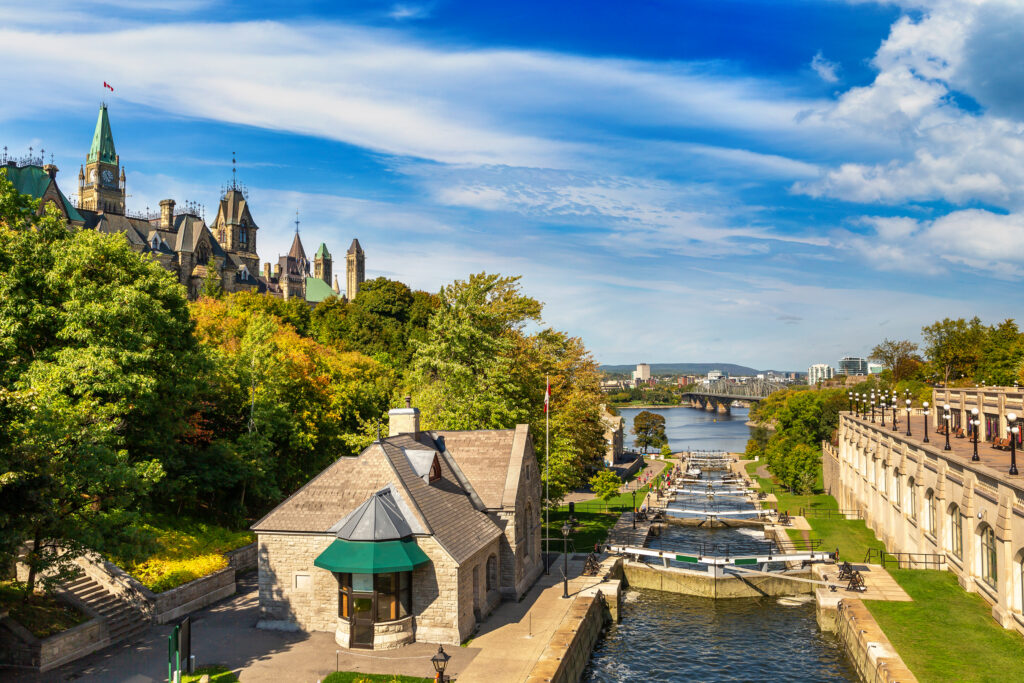
Canada’s canals are often described through measurements: kilometres of waterway, numbers of locks and tonnes of goods transported. But behind every canal are people—engineers, stonemasons, surveyors, labourers, public servants and entrepreneurs whose work helped shape the country.
Many of these individuals are laid to rest at Beechwood Cemetery.
Beechwood’s new ebook, A Beechwood History of Canals, explores the development of Canada’s canals through the lives of the people who built, managed, defended and documented them.
Building a Country Through Water
During the early 19th century, canals were among the largest and most ambitious infrastructure projects undertaken in British North America.
The Lachine Canal opened in 1825, allowing vessels to bypass the Lachine Rapids and helping transform Montreal into a major industrial and commercial centre. The first Welland Canal followed in 1829, creating a navigable route between lakes Ontario and Erie without passing through Niagara Falls.
The Rideau Canal was built for a different purpose. Following the War of 1812, the British government wanted a secure military supply route between Montreal and Kingston that would avoid the vulnerable St. Lawrence River.
Construction began in 1826 under Lieutenant-Colonel John By. Dams, channels and locks connected existing rivers and lakes across more than 200 kilometres of wilderness. The project also created the settlement of Bytown, which would later become Ottawa.
These canals strengthened trade, encouraged settlement and helped communities grow. They also carried significant financial, social and environmental costs. The ebook examines this broader history while introducing the people whose lives were closely connected to it.
A History Written Across Beechwood
The people featured in A Beechwood History of Canals were engineers and builders, but they were also artists, soldiers, journalists, politicians, entrepreneurs and public servants.
Some designed the waterways. Others constructed their locks, managed their operations, transported goods along them, recorded their development or defended the communities that grew beside them.
Their monuments at Beechwood form a physical record of an era when canals helped determine how Canada would develop.
By exploring their stories, we gain a deeper understanding of the waterways that shaped the country and the people whose work made them possible.