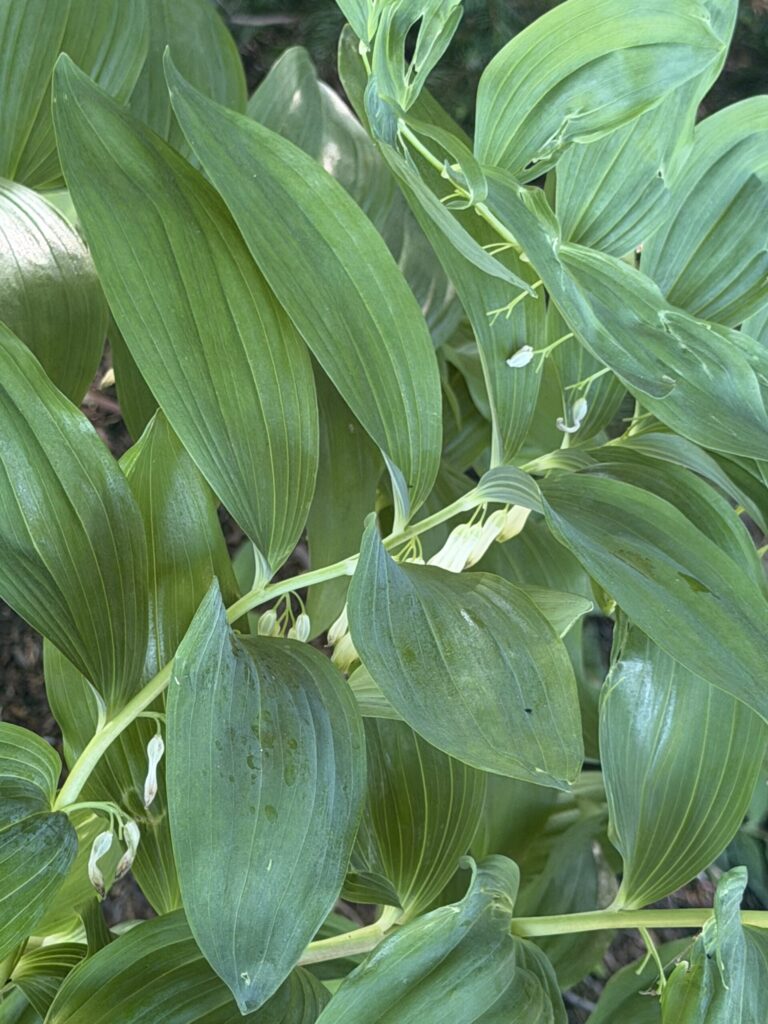
Tucked beneath the canopy of trees in Beechwood’s Botanical Gardens, where sunlight filters gently through the leaves and the air remains cool and moist, grows one of North America’s most elegant woodland plants: Solomon’s Seal (Polygonatum biflorum).
At first glance, Solomon’s Seal may appear understated. Unlike the bold colours of summer flowers or the dramatic blooms of spring bulbs, its beauty reveals itself slowly. Graceful arching stems rise from the forest floor, lined with soft green leaves that seem to flow like a ribbon through the shade. Beneath each stem hang delicate bell-shaped flowers, hidden from casual view and rewarding those who take the time to look closely.
Native to eastern and central North America, including parts of Ontario, Solomon’s Seal has long been associated with woodland landscapes. It thrives in the same conditions found throughout portions of Beechwood’s Botanical Gardens: rich soils, dappled sunlight, and the quiet shelter provided by mature trees. In these environments, the plant spreads slowly through underground rhizomes, creating colonies that can persist for decades.
The name “Solomon’s Seal” carries a sense of mystery. According to tradition, the scars left on the plant’s rhizomes resemble the seal of the biblical King Solomon. Whether fact or folklore, the name has endured for centuries and continues to spark curiosity among gardeners and botanists alike.
One of the qualities that makes Solomon’s Seal so valued in shade gardens is its architectural form. Rather than reaching upward in a rigid fashion, the stems bend gracefully, creating a natural sense of movement within the landscape. In late spring, small greenish-white flowers dangle beneath the leaves before giving way to blue-black berries later in the season. By autumn, the foliage transforms into shades of golden yellow before retreating underground for the winter.
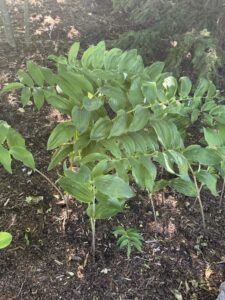
Beyond its beauty, Solomon’s Seal plays an important ecological role. Woodland pollinators visit its flowers, while birds may be attracted to its seasonal fruit. As a native species, it contributes to the biodiversity of shaded garden environments and helps recreate the character of Ontario’s natural forest understories.
Its presence at Beechwood serves as a reminder that some of nature’s most remarkable plants do not seek the spotlight. They thrive quietly in the margins, adding texture, resilience, and beauty to the landscape. Solomon’s Seal rewards patience and observation, offering visitors a chance to discover the subtle wonders that often go unnoticed.
As you explore Beechwood’s Botanical Gardens, take a moment to look beneath the trees. There, among the shade and stillness, you may find Solomon’s Seal arching gently toward the earth, a timeless woodland plant that has been flourishing in North American forests for generations.