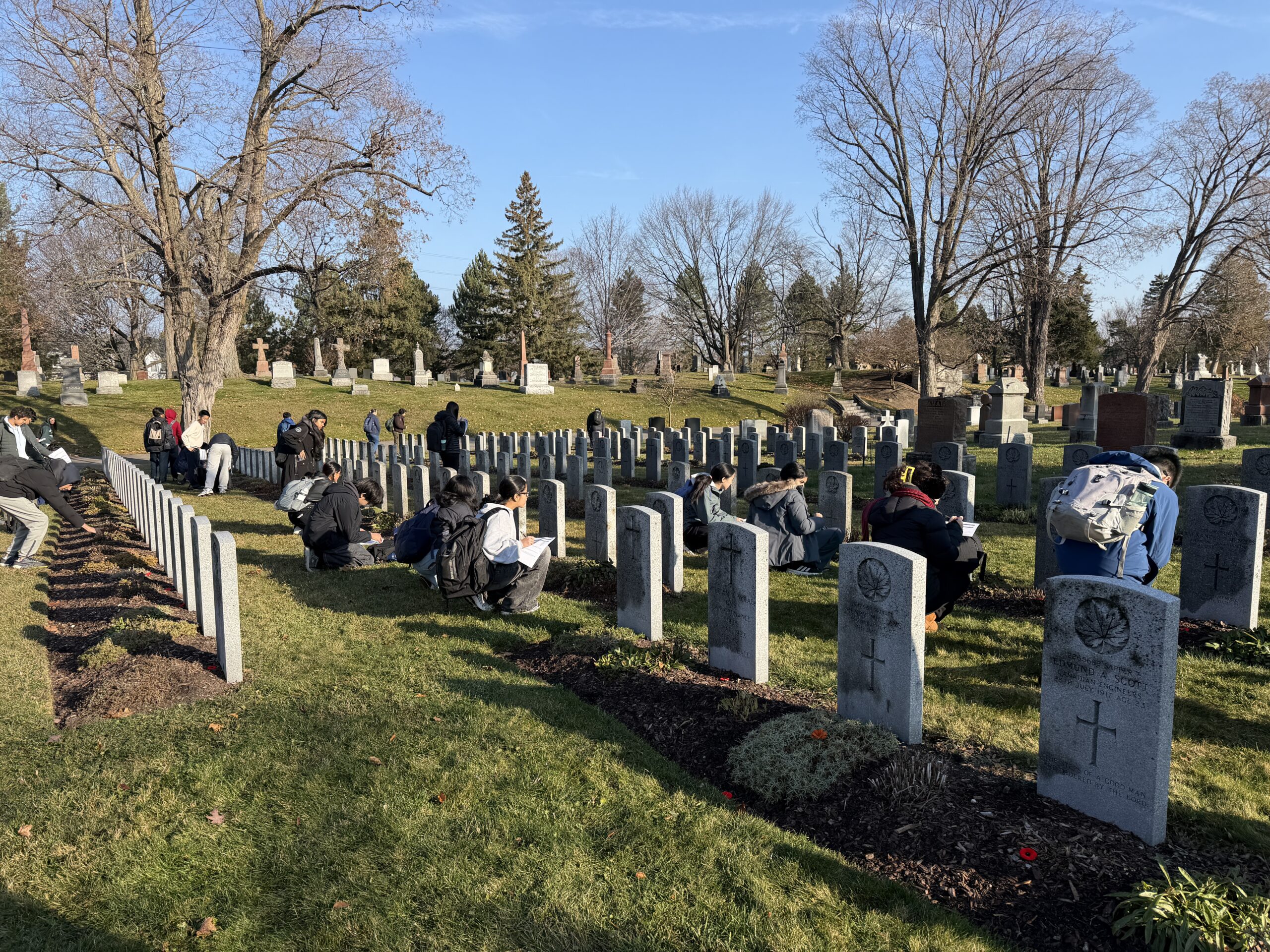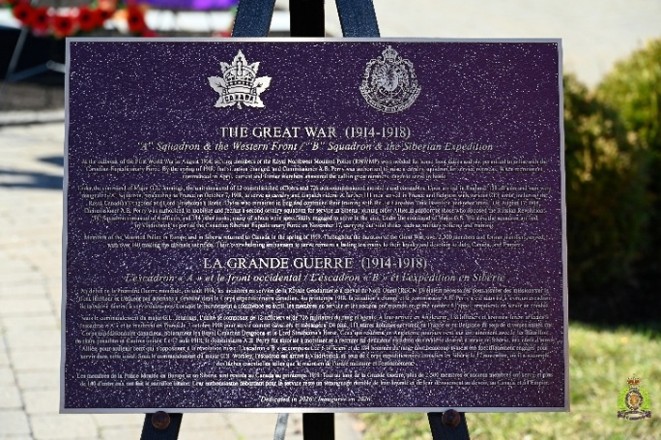
On November 8, 2026, Beechwood Cemetery, the National Cemetery of Canada, welcomed members of the Royal Canadian Mounted Police (RCMP), veterans, military representatives and community leaders for the unveiling of a new commemorative plaque at the RCMP National Memorial Cemetery.
Held during Veterans’ Week, the ceremony honoured an often-overlooked chapter of Canadian military history: the extraordinary contributions and sacrifices of members of the North-West Mounted Police and Royal North-West Mounted Police during the First World War.
The new plaque, installed along the Veterans’ Legacy Pathway, recognizes the service of two historic units: “A” Squadron, which served on the Western Front, and “B” Squadron, which participated in the Canadian Siberian Expedition.
Together, their stories reflect the courage, determination and commitment to service that have shaped Canada’s military and policing traditions.
A Remarkable Contribution to the First World War
When the First World War began in 1914, the Royal North-West Mounted Police was a relatively small organization, with approximately 1,268 members responsible for maintaining law and order across vast areas of Canada.
Yet, between 1914 and 1919, more than 3,400 serving and former members, wartime recruits and veterans of the Mounted Police answered the call to military service.
Their participation was extraordinary. The number who served overseas was nearly three times the Force’s original peacetime strength.
As members departed for military service, the organization’s active strength in Canada fell to just 303 men, resulting in the closure of nearly 80 percent of its detachments.
Their willingness to serve demonstrated a remarkable commitment to Canada during one of the most difficult periods in its history.
Many temporarily resigned or took leave from the Mounted Police to enlist in the Canadian Expeditionary Force and other Allied military formations. They served in numerous theatres of war, earning recognition for their courage and sacrifice.
“A” Squadron: Service on the Western Front
For much of the war, serving members of the Royal North-West Mounted Police were required to remain in Canada to maintain domestic security and stability.
That changed in April 1918, when Commissioner A.B. Perry received authorization to organize a cavalry unit for overseas service.
Under Major G.L. Jennings, a force of 726 officers, non-commissioned members and constables was mobilized.
By October 1918, 158 members had crossed the English Channel as “A” Squadron, serving on the Western Front as cavalrymen and dispatch riders.
Another 111 members served in France and Belgium with formations including the Royal Canadian Dragoons and Lord Strathcona’s Horse, while others trained with the 1st Canadian Tank Battalion.
Their service connected Canada’s policing history directly to the battlefields of the First World War.
“B” Squadron: Canada’s Expedition to Siberia
While members of “A” Squadron served in Europe, another group of Mounted Police personnel was preparing for a very different mission.
In August 1918, authorization was granted to establish “B” Squadron as part of the Canadian Siberian Expeditionary Force.
Under Major G.S. Worsley, six officers and 184 other members travelled across the Pacific Ocean, arriving in Vladivostok in November 1918.
Their mission took place against the backdrop of the Russian Revolution and the political and military instability that followed.
Members of “B” Squadron performed military policing duties in a challenging and uncertain environment.
By the spring of 1919, members of both squadrons had returned to Canada, where the Royal North-West Mounted Police would eventually evolve into the modern RCMP.
Remembering More Than 140 Lives Lost
The contributions of the Mounted Police during the First World War came at a significant human cost.
More than 140 serving and former members who participated in wartime military service lost their lives.
Behind each of those losses was an individual story: a family, a community and a commitment to service.
These were men who had once patrolled Canada’s western plains, served communities and helped establish the country’s early policing institutions.
Many would never return home.
Their sacrifice forms an important part of Canada’s military history and reinforces the connection between the Canadian Armed Forces, the RCMP and the broader tradition of national service.
A Permanent Tribute at Beechwood Cemetery
The November 8 unveiling brought together representatives from Canada’s policing, military and veterans’ communities.
Among those participating were RCMP Commissioner Mike Duheme; Brigadier-General Rick Perrault, representing Veterans Affairs Canada; Brigadier-General Vanessa Hanrahan, Canadian Forces Provost Marshal; Member of Parliament Marie-France Lalonde; and Wayne Jacquard, President of the Ottawa Division Veterans Association.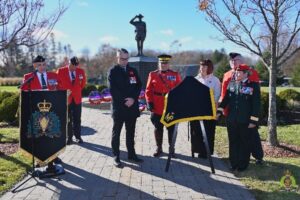
Marc Dureau served as master of ceremonies, with Kevin Mole also participating in the unveiling.
The commemorative plaque joins the growing collection of tributes along the Veterans’ Legacy Pathway at the RCMP National Memorial Cemetery.
These memorials help tell the stories of the people, organizations and defining moments that have shaped the RCMP’s history.
More importantly, they provide visitors with opportunities to discover chapters of Canadian history that might otherwise remain unfamiliar.
Preserving History for Future Generations
As the National Cemetery of Canada, Beechwood has a responsibility that extends beyond providing a final resting place.
It is also a place of education, reflection and national remembrance.
The RCMP National Memorial Cemetery is an important part of that responsibility, recognizing the service of generations of Mounted Police members and preserving their contributions to Canadian history.
The addition of this Great War plaque strengthens that mission.
It ensures that future generations can learn about the men of “A” and “B” Squadrons, understand the historical connections between policing and military service, and reflect on the sacrifices made during the First World War.
As Canadians gather during Veterans’ Week and on Remembrance Day, this new memorial offers another opportunity to reflect on the meaning of service.
The plaque is more than a permanent marker in bronze. It is a commitment to remembrance.
It recognizes the individuals who answered Canada’s call during the Great War, the families who endured their absence, and the more than 140 members who never returned.
At Beechwood Cemetery, their stories will continue to be shared, their contributions recognized and their sacrifices remembered.
Lest We Forget. Nous nous souviendrons d’eux.